Four steps to providing feedback that leads to change
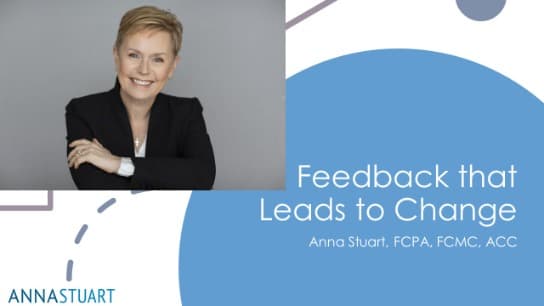
Feedback – we all want feedback but most of us don’t provide feedback. As a self-regulating profession, accountants are trained in identifying and naming ethical and professional practice issues. Feedback in these cases can be provided objectively based on professional guidelines and standards with the expectation of action in the form of compliance with clear repercussions for non-compliance.
But the approaches that work for giving feedback when the objectives and expectations are clear do not always work when providing more subjective performance feedback. Developing new ways of providing feedback that gets heard and actioned is an essential skill for CPAs who manage or lead people.
This course provides a framework for planning for giving feedback and introduces the skills essential to confidently and competently share feedback that leads to change. This course is ideal for CPAs who are new managers/leaders or CPAs that lead people and want to improve their leadership skills.

FCPA, FCMC, ACC
With more than 25 years of experience advising and coaching organizations and leaders in complex contexts, I have established a strong reputation for helping organizations and individuals to realize their goals. I have designed, delivered and facilitated hundreds of presentations and group meetings. As co-owner of an executive search and HR consulting firm, I led and managed the firm’s growth and national expansion. I’ve been a consulting partner and principal with two large public accounting and consulting firms and have held senior finance leadership roles in the public sector and in a global not-for-profit organization. I have taught at the university undergraduate and high school continuing education levels. I am a Fellow of the Chartered Professional Accountants, a Certified Executive Coach and Associate Certified Coach with the International Coaching Federation, a Fellow Certified Management Consultant, and have a Master of Business Administration Degree. I am certified to interpret Gallup Clifton Strengths assessments, the Hogan Assessment, and the Management Research Group LEA Self-Assessment and LEA 360 Assessment.
