Learn the core principles of communication and apply them to resolve conflicts with confidence - creating trust, collaboration, and lasting results.
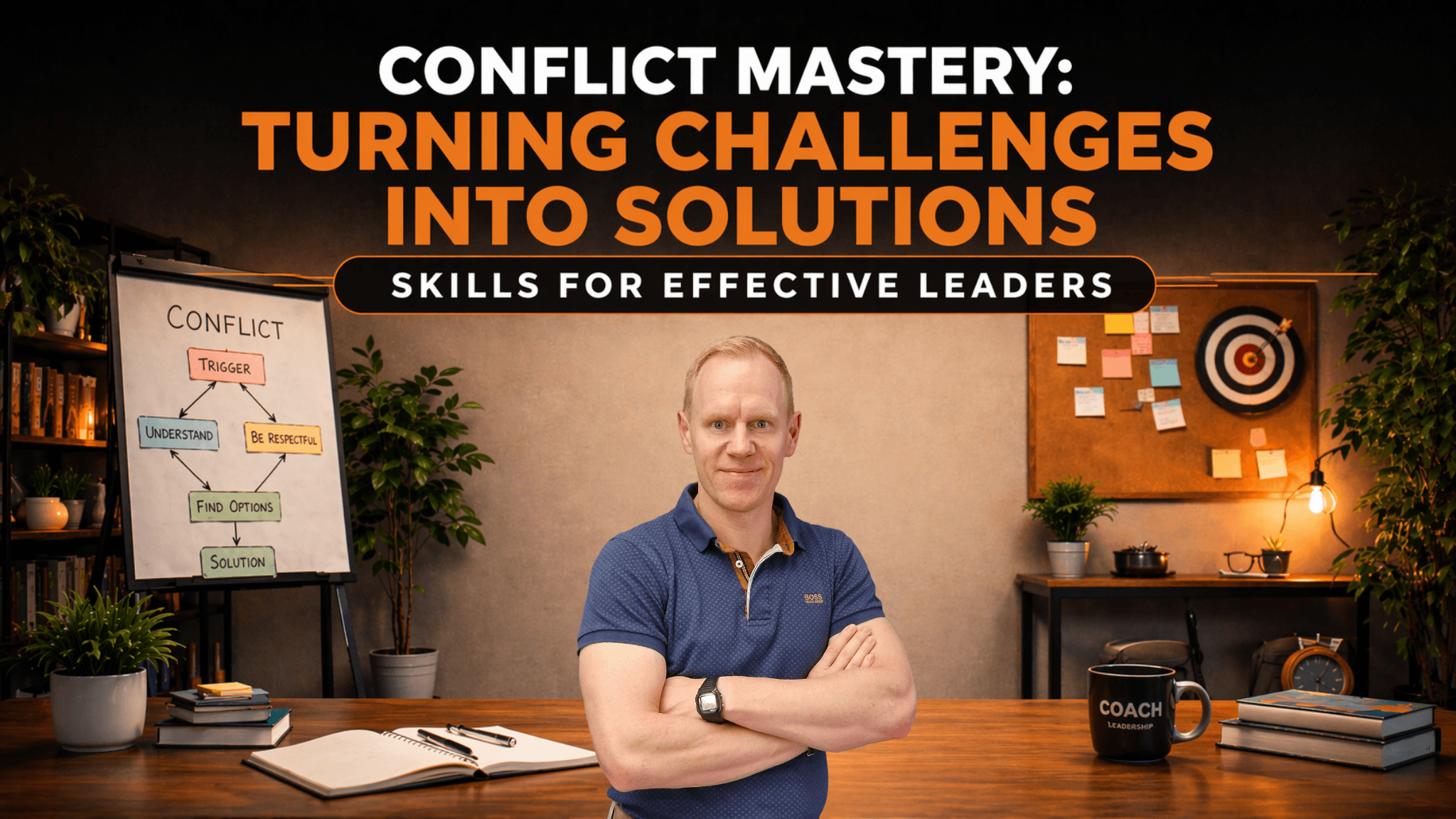
Conflict is part of leadership. Avoiding it is not a strategy.
This course shows you how to handle conflicts with clarity, structure, and confidence - without damaging relationships.
Most conflicts don’t start with big problems.
They start with misunderstandings, unclear communication, and wrong assumptions.
Before you can resolve conflict, you need to understand it.
This course gives you a clear framework to:
You’ll learn how to avoid typical mistakes like blame, assumptions, and emotional escalation.
Conflicts become dangerous when they are ignored or handled poorly.
Strong leaders address them early, clearly, and constructively.
You will learn how to:
One key question you’ll use:
“Why is this important to you?”
This course focuses on real situations - not abstract theory.
You will apply:
And most importantly:
Nonviolent Communication (NVC) - a simple and powerful way to communicate without blame.
After this course, you will be able to:
You don’t avoid conflict anymore - you lead through it.

HR Expert | Certified Trainer & Business Coach | Mediator | Author
Welcome to my profile! I'm Thomas, a dedicated HR professional, business coach, and mediator with over two decades of experience in leadership and people development. With a specialization in Human Resource Management and Production & Logistics Management during my studies, I’ve built my career around helping individuals and organizations grow. Over the years, I’ve designed and delivered impactful training programs, guided leaders in their development, and supported professionals in mastering the challenges of modern leadership. As a certified trainer and experienced personnel developer, I bring both proven concepts and practical insights into my sessions. My role as HR Leader in the KTX Group enables me to integrate real-world examples into my seminars, ensuring they are relevant, engaging, and results-driven. In addition, I’ve worked as a recruiter and conducted hundreds of job interviews, gaining valuable knowledge of application processes and the intricacies of hiring – experience I now use to support both professionals and organizations in reaching their goals. In 2023, I founded the Growing Mind Academy, a passion project dedicated to empowering individuals to achieve their career ambitions. Through a mix of online and live training formats, I offer high-quality learning experiences, proven strategies, and exclusive knowledge that have already benefited many. I’m committed to providing you with the tools and concepts you need to succeed in your career journey. Are you ready to take the next step? I look forward to welcoming you to one of my courses soon. Best regards, Thomas
